New Directions
Recently Jill has been creating cyanotypes on fabric. Any natural fibre such as cotton, linen and silk can be used. Man-made fibres do not work for this technique.
Application of the cyanotype chemicals is the same as for paper, although it is sometimes easier to submerge the fabric into the chemicals rather than paint it on the surface. Fabric absorbs more of the chemicals, so larger quantities are required.
Both traditional blue and white cyanotypes and wet cyanotypes have been successful.
Cyanotype chemicals react to normal laundry detergents and will fade in the wash. Use detergents that do not contain phosphates. A cool hand-wash is preferable.
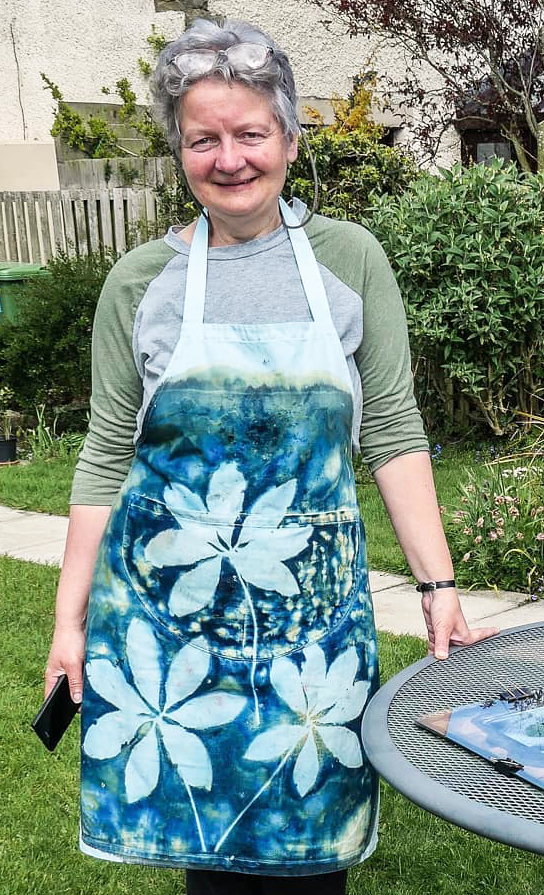
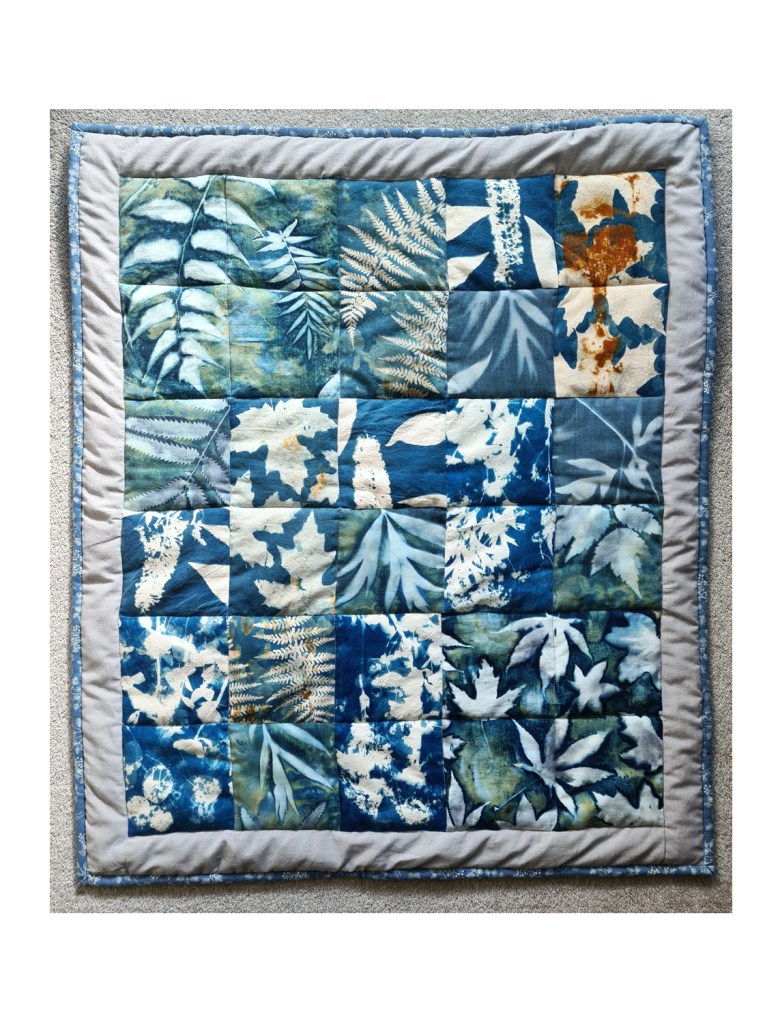
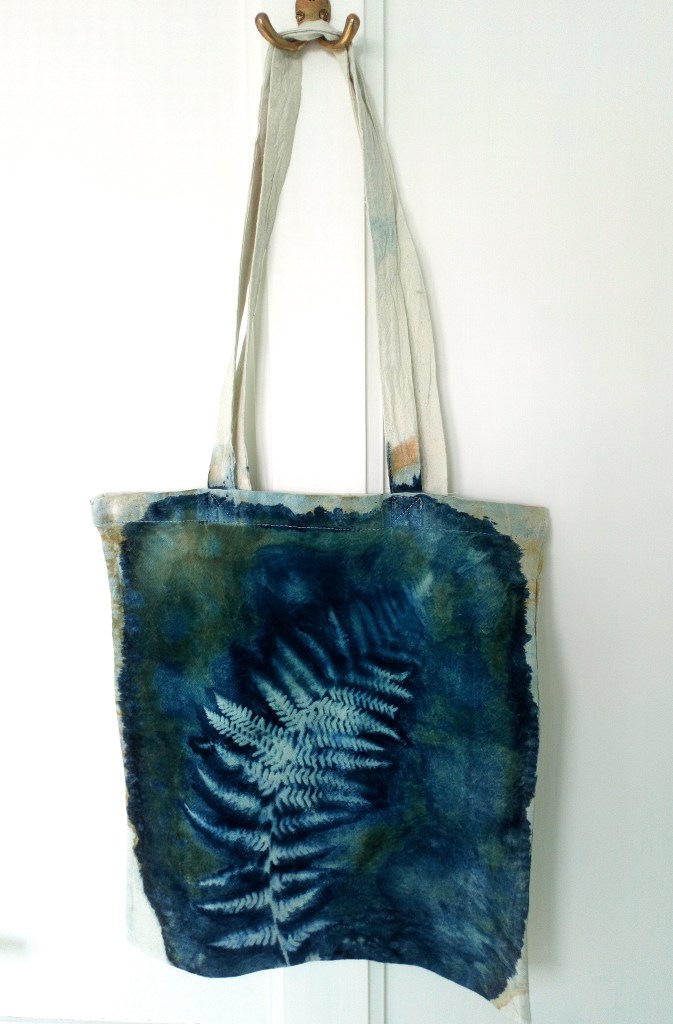
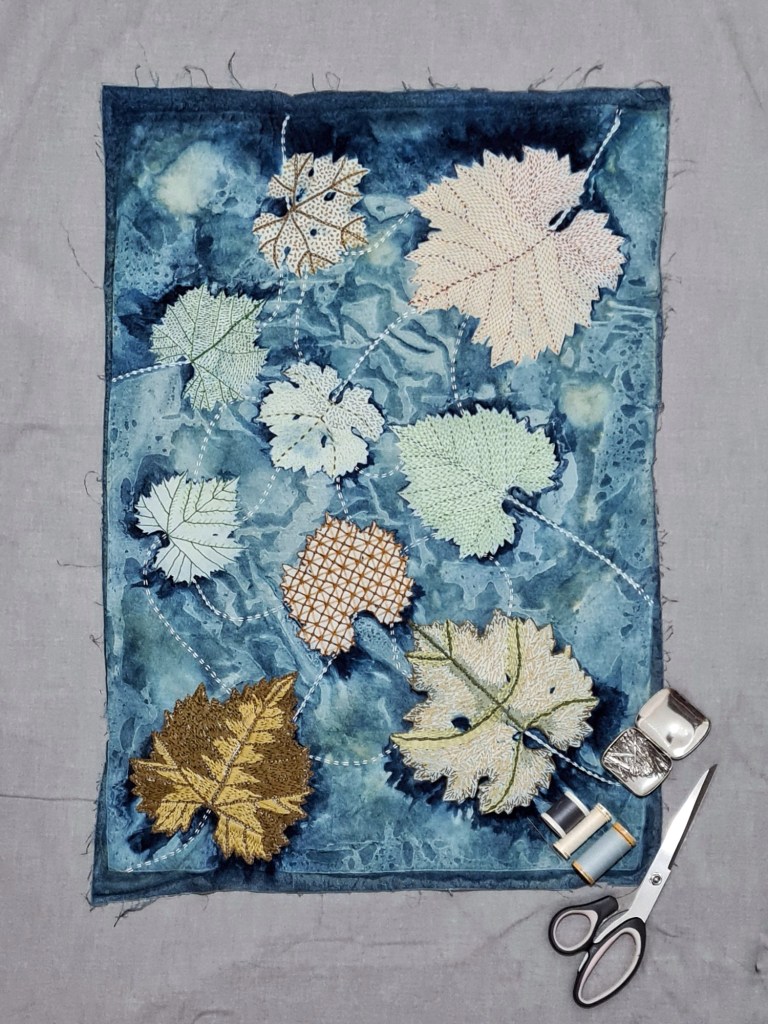
Jill has used the fabric to create lampshades, a small quilt and has created cyanotype images on tote bags and aprons. She has also embroidered into the end results with a view to creating wall hangings.




World Cyanotype Day 2023
World Cyanotype Day takes place on the last Saturday in September every year. My submission for this years theme of “Inheritance” was this traditional cyanotype on a vintage cotton napkin. It is an old family photo surrounded by ferns from a local woodland. Ferns are a symbol of rebirth. I called my piece “Eternal Youth”. All submissions for World Cyanotype Day can now be viewed in a gallery on the Alternative Photography website.

 Mirrored Images